







If you draw regularly—whether it’s anime linework, fashion flats, product concepts, or quick architectural thumbnails—you already know the problem: some markers are great for filling, but weak on detail; others handle outlines well, but streak when you try to blend. A dependable alcohol marker set needs to do both without forcing you to “fight the tool.”
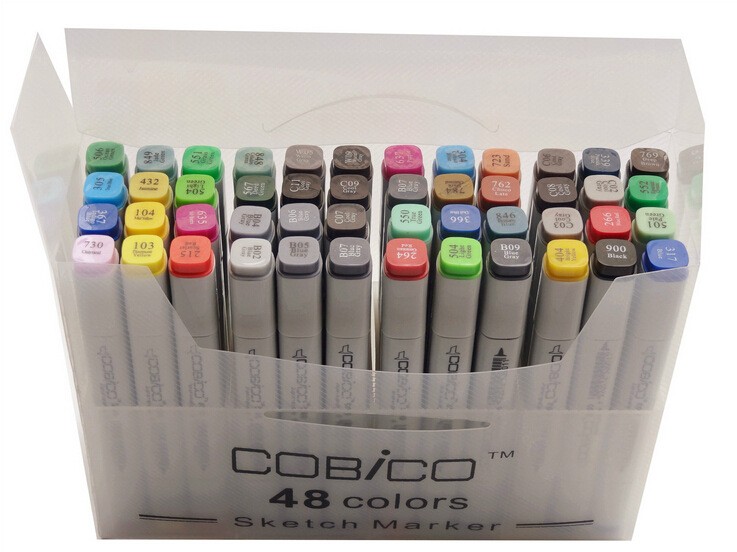
That’s why Dual-Tip Alcohol Art Markers for Drawing, Sketching & Design are built around a practical, two-tip workflow: a 1mm fine tip for controlled detail work, and a 1–6mm chisel tip for fast, clean coverage. Instead of switching tools mid-sketch, you can keep your rhythm—outline, fill, shade, and refine—using the same marker body.
Two tips, two jobs: how artists really use them
A dual-tip marker only matters if the tips are genuinely useful. Here’s how the fine and chisel tips typically split the workload in real projects:
1mm Fine Tip (precision + control)
Tight outlines, hair strands, facial features, and small pattern fills
Tech-style notes and callouts in product sketches
Quick hatch shading on edges and folds
Clean borders around highlights (so your bright areas stay crisp)
1–6mm Chisel Tip (coverage + speed)
Blocking base colors on large areas: skin base, clothing panels, backgrounds
Creating broad gradients by varying angle and pressure
Filling architectural planes (walls, floors) efficiently
Laying down smooth mid-tones before you add detail with the fine tip
This division of labor is what keeps your process efficient—especially when you’re doing multiple sketches in a session and need consistency from piece to piece.
Ink behavior that supports layering (not smudging)
Alcohol markers are popular for a reason: when the ink is formulated well, it dries quickly and blends smoothly. These markers use quick-dry, alcohol-based ink designed for smooth, fade-resistant layering with minimal smudging—important for anyone who builds color in steps rather than trying to hit the final tone in one pass.
A practical way to think about alcohol marker technique is “layers first, details last”:
Base layer: light tone fills (broad coverage with chisel tip)
Shadow mapping: mid-tone zones (chisel tip edge or fine tip for tighter areas)
Depth layer: deeper shadows in small controlled passes (fine tip)
Edge cleanup: refine borders and add texture lines (fine tip)
For beginners, this makes results more predictable. For experienced artists, it means you can work faster without compromising clean edges.
Color sets that match different skill levels and project needs
Color selection is where many marker sets either shine or fail. Too few colors forces muddy mixing; too many duplicates create confusion. These sets are available in 36 / 80 / 120 options, and they’re color-coded, which matters more than people think when you’re mid-project and trying to stay in flow.
How to choose the right set size
36 colors
Best for students, casual sketching, quick concept thumbnails
Focus on core hues + basic neutrals
Easier to learn value control without being overwhelmed
80 colors
A strong “daily use” range for most creators
Better transitions for skin tones, fabric folds, landscapes
Enough variety to avoid repetitive-looking palettes
120 colors
Best for advanced illustration and design rendering
More nuanced families (pastels, grays, neons) for specialized work
Strong choice if you frequently create client-ready visuals
The inclusion of neons, pastels, and grays is especially helpful because these are the colors that make work look intentional: grays for structure and realism, pastels for soft lighting, neons for energy and pop.
Durable build + fast identification (small details that save time)
Markers get used hard—thrown into backpacks, rolled across desks, passed around classrooms. A durable black plastic body is not just about appearance; it’s about surviving real handling without feeling fragile.
Two design choices here directly improve daily usability:
Color-matched caps help you identify colors quickly (fewer “wrong color” accidents).
A portable carry bag keeps the set organized and makes it genuinely easy to take to class, studio, or onsite work.
If you’ve ever lost time hunting for one missing color at the bottom of a drawer, you’ll appreciate how much smoother a carry system makes the creative routine.
Where these markers fit: practical applications beyond “just drawing”
These aren’t only for hobby sketchbooks. Dual-tip alcohol markers are commonly used in workflows where speed + clarity matter:
Illustration & character art
Clean line reinforcement with the fine tip
Fast background or clothing blocks with chisel tip
Layered shading that stays smooth instead of streaky
Product design
Quick form studies with grayscale sets
Color accents to highlight materials and surfaces
Fast “idea-to-visual” iterations for presentations
Interior design
Warm/cool palettes for room mood exploration
Broad surfaces (walls/floors) filled quickly
Detail accents (trim, fixtures) handled cleanly
Architectural rendering
Value mapping with grays
Plane separation using subtle tone steps
Chisel tip for large areas, fine tip for structural lines
These use cases share one requirement: the marker must help you communicate ideas clearly, not slow you down.
A simple workflow you can copy today (beginner-friendly)
If you’re new to alcohol markers, here’s a reliable process that avoids common mistakes:
Sketch lightly first (keep pencil lines soft so they don’t fight your color)
Start with the lightest tone in each area (base fill)
Add mid-tones in the shadow zones (don’t over-blend yet)
Deepen shadows only where needed (small, controlled passes)
Use the fine tip for edges and texture (creases, hair, stitching, reflections)
Step back and balance the values (often the fix is “add a mid-tone,” not “add more dark”)
This method produces cleaner results, especially on fashion, anime, and landscape work where value separation makes the piece look finished.
A note on OEM/ODM capability and production reliability
For schools, brands, distributors, and promotional projects, marker performance is only half the story—reliable manufacturing and delivery matter too.
NINGBO SEVEN STAR STATIONERY & GIFT CO., LTD. is based in Ningbo, near Ningbo Port, and focuses on manufacturing pens, notebooks, and other stationery and gift products. With OEM and ODM services, a 12,000㎡ factory, 300+ employees, and multiple production process technologies, they’re positioned to support both stable supply and customization needs for different markets and use cases.
Wrap-up: a practical set for real drawing and design tasks
A good alcohol marker set should help you work faster, cleaner, and with more confidence. With a fine tip for control, a chisel tip for coverage, quick-dry layering ink, and multiple color set options, these markers are built for both learning and serious output—whether you’re sketching daily, studying design, or building a portfolio.
Breaking news
- 7 Answers to Questions About Acrylic MarkersJul 16, 2026As of 2024, the painting materials market has an increasing demand for purchasing acrylic markers. Suppliers have developed a variety of different sty...
- The Ultimate Guide to Choosing the Best Paint Brushes for Professional ArtistsJul 16, 2026Discover the essential technical factors and professional tips for choosing the right artist paint brushes, backed by 15 years of H&B Art manufacturing expertise.
- Why Multi-Color Whiteboard Markers Remain a Strong Wholesale Stationery ProductJul 16, 2026Explore wholesale multi-color whiteboard markers with smooth writing, clean erasing, low-odor ink, and chisel tips for school, office, and business use.
- Dual-Tip Alcohol Markers That Actually Fit Real Creative WorkflowsJul 16, 2026Dual-tip alcohol markers with 1mm fine tip and 1–6mm chisel tip for smooth, quick-dry layering—ideal for illustration, design, and rendering.
Contacts Us